
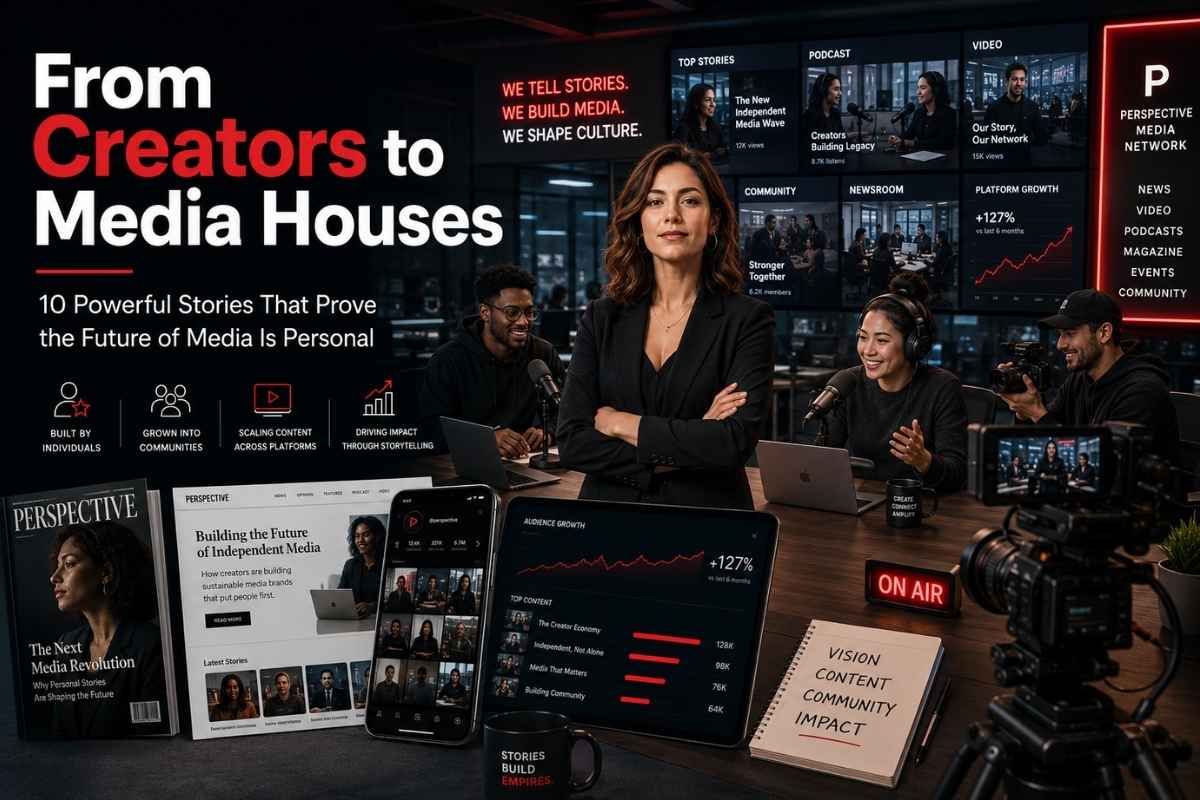
There was a time when media houses created stars. Today, stars are creating media houses.
This is one of the biggest shifts in the global media industry. A person with a camera, a point of view, a sharp sense of storytelling and the courage to publish consistently can now build an audience larger than many newspapers, magazines and television channels. But the real transformation begins when that creator stops being only a personality and starts building a system — a team, a platform, a content engine, a revenue model and a long-term brand.
That is when a creator becomes a media house.
Across the world, and now strongly in India, several creators have moved beyond personal fame. They have built companies, studios, networks, podcasts, OTT-style platforms, branded content divisions, live events, merchandise lines, advertising models and creator ecosystems. Their journeys prove that the media business is no longer only about owning printing presses, television licenses or large corporate newsrooms. It is about owning trust, attention, community and distribution.
For a growing media company like GPDM, this shift is not just inspiring — it is highly relevant. The future belongs to those who can combine personality with professionalism, creativity with structure, and audience loyalty with business discipline.
Here are ten powerful examples of creators who evolved into media houses.
1. MrBeast – From YouTuber to Global Media Empire
Jimmy Donaldson, popularly known as MrBeast, is perhaps the most visible example of a creator who has turned content into a large-scale media and business empire. What started as YouTube videos built around challenges, giveaways and extreme entertainment has now become a multi-layered enterprise.
MrBeast is no longer just a YouTube channel. His ecosystem includes multiple content channels, high-production video formats, philanthropy-driven storytelling, consumer products, food brands and large-scale brand partnerships. His company, Beast Industries, shows how a creator can build beyond content and move towards the model of a modern entertainment company.
The strength of MrBeast lies in scale and format ownership. He did not simply depend on personality-driven vlogging. He created repeatable content formats that audiences immediately understood — big challenges, emotional rewards, spectacular execution and high retention. Every video became an event.
His journey teaches one major lesson: if a creator wants to become a media house, the content cannot remain casual forever. It must develop systems, production discipline, brand partnerships, professional teams and long-term intellectual property.
2. Rhett & Link – Building Mythical Entertainment
Rhett McLaughlin and Link Neal started as comedy creators and became one of the strongest examples of creator-led media entrepreneurship through Mythical Entertainment.
Their flagship show, Good Mythical Morning, became a daily digital entertainment habit for millions of viewers. But instead of remaining only performers in front of the camera, they built an entire media company around their creative universe. Mythical Entertainment expanded into podcasts, live shows, merchandise, books, food-related formats and other digital properties.
What makes Rhett & Link important is their long-term consistency. They understood that a creator brand cannot survive only on virality. It needs programming discipline, predictable formats, recurring audience habits and a professional back-end.
Their media house model is not built on controversy or shock. It is built on reliability, personality, humour and audience comfort. For Indian media entrepreneurs, this is a powerful case study because it shows that even simple formats can become large media businesses when they are executed consistently over many years.
3. The Try Guys – From BuzzFeed Talent to Independent Media Company
The Try Guys began as a group of creators within BuzzFeed, producing humorous videos around trying unusual, uncomfortable or unfamiliar experiences. Their chemistry, relatability, and format became popular, but the real turning point came when they left BuzzFeed and launched their own company, 2nd Try LLC.
This move is important because it represents one of the clearest examples of creators taking ownership of their audience and intellectual property. Instead of remaining employees inside a large media company, they became media owners themselves.
Their company expanded into YouTube programming, live shows, branded content, books, television projects and eventually subscription-based content. Their journey also shows the challenges of creator-led companies. When a creator brand depends heavily on personalities, internal controversies or exits can affect the entire business. Yet, their ability to continue proves the importance of building a company that can survive beyond one face.
The Try Guys story is a reminder that creators must eventually convert popularity into ownership. Audience attention is valuable, but ownership of the platform, format, database, brand and revenue model is what builds a media house.
4. Alex Cooper – From Podcast Host to Unwell Network
Alex Cooper’s journey from the host of Call Her Daddy to the founder of Unwell Network shows how podcast creators can become media entrepreneurs.
Her rise began with a deeply personal, bold and conversational podcast format. She built a loyal audience by speaking in a voice that felt direct, intimate and culturally current. But the larger move came when she converted her personal podcast success into a broader network.
Unwell Network was created to develop and host other creator-led shows and personalities. This is the classic transition from “I am the content” to “I own a content ecosystem.” Cooper’s journey is especially relevant because podcasting has become one of the most powerful forms of modern media. It combines personality, long-form trust, community and advertising potential.
Her story proves that creators who build strong personal audiences can use that trust to launch other voices, shows and formats. That is exactly how a media house grows — by moving from one flagship property to multiple properties under one brand architecture.
5. Nas Daily – From One-Minute Videos to Nas Company
Nuseir Yassin, known globally as Nas Daily, built his identity through one-minute daily videos that explained people, cultures, countries, ideas and social issues in a simple, emotional and highly shareable format.
The original promise was clear: one video every day for 1,000 days. That commitment itself became a media story. Over time, Nas Daily grew into a global community, and then into a larger business ecosystem through Nas Company, Nas Studios and Nas Academy.
Nas is an important case because he converted storytelling into education, production and community building. His company works in media, creator education, community platforms and branded storytelling. This is a strong example of how a creator can evolve from publishing content to enabling other people and brands to communicate better.
The lesson here is that creators who master a format can later build services around that mastery. A good storyteller can become a studio. A good teacher can become an academy. A good community builder can become a platform.
6. Dave Portnoy – From Sports Blogger to Barstool Sports
Dave Portnoy’s journey with Barstool Sports is one of the most well-known examples of a personal voice turning into a powerful media brand. Barstool began as a sports and pop-culture publication with a raw, opinionated and highly distinctive tone. Over time, it expanded into podcasts, videos, live events, personalities, merchandise and sports entertainment.
Portnoy’s strength was not polished corporate journalism. It was voice. Barstool created a culture around its audience. It understood that in modern media, community identity can be as powerful as information.
The brand also shows that creator-led media can be polarising. A strong voice attracts loyal audiences, but it also invites criticism and controversy. Still, Barstool’s growth proves that media houses do not always begin with institutional neutrality. Some begin with a personality, a tone and a tribe.
For emerging media founders, the lesson is clear: a strong editorial voice can become a brand asset. But as the business grows, that voice must be balanced with responsibility, governance and long-term credibility.
7. The Viral Fever – India’s Digital Content Revolution
In India, The Viral Fever, popularly known as TVF, is one of the strongest examples of creators building a digital-first media company. Founded by Arunabh Kumar, TVF began with online videos targeted at young Indian audiences who were not fully represented by traditional television.
TVF understood the mood of India’s youth before many legacy media companies did. It built stories around students, engineers, young professionals, friendships, ambition, middle-class dreams and urban Indian life. Shows like Permanent Roommates, Pitchers, Kota Factory and Aspirants helped TVF become a major name in India’s digital entertainment space.
What makes TVF important is that it moved from sketches and YouTube videos to full-fledged web series and platform-driven storytelling. It proved that the internet was not just a place for short viral clips. It could also produce long-form, emotionally rich, culturally relevant Indian stories.
TVF’s journey is especially important for Indian media entrepreneurs because it shows that digital media can create intellectual property strong enough to compete with television and OTT platforms.
8. Ranveer Allahbadia – From BeerBiceps to a Creator Business Ecosystem
Ranveer Allahbadia, known as BeerBiceps, began as a fitness and self-improvement creator and gradually expanded into podcasting, entrepreneurship, talent management and digital media.
His transformation is significant because he understood the power of personal brand diversification. BeerBiceps became more than a YouTube channel. It evolved into a podcast platform, a self-growth content brand and a gateway to multiple business ventures. Through Monk Entertainment, which he co-founded, he also entered the creator management and influencer marketing space.
Ranveer’s journey represents a modern Indian creator model: build trust through personal content, expand into podcasts, create business partnerships, manage other creators and develop multiple revenue streams.
For GPDM and similar media companies, this example is important because it shows that creator-led media is not limited to publishing. It can include talent management, branded content, podcast production, influencer partnerships, live events and education.
9. Kamiya Jani – From Travel Creator to Curly Tales
Kamiya Jani’s Curly Tales is one of India’s best-known creator-led food and travel media platforms. What began as travel and food storytelling developed into a large digital media brand covering destinations, restaurants, celebrity food conversations, lifestyle experiences and cultural discoveries.
Curly Tales is a strong Indian example because it sits at the intersection of creator personality and editorial platform. Kamiya Jani remains the face of the brand, but Curly Tales has grown beyond one person. It has become a recognisable platform with its own format, visual language and audience expectation.
The brand’s success lies in making food and travel aspirational yet accessible. It does not only review places. It creates experiences around people, destinations, celebrities, meals and memories.
For GPDM, especially with platforms like Explore Goa, Incredible Goa and Food & Hospitality Magazine, Curly Tales offers an important lesson: local discovery, travel storytelling and food content can become a scalable media business when packaged with personality, video, consistency and strong platform identity.
10. Shradha Sharma – From Storyteller to YourStory
Shradha Sharma’s YourStory is one of India’s most important examples of storytelling becoming a media institution. Unlike many influencer-first examples, YourStory was built around entrepreneurial storytelling. It gave visibility to startups, founders, small businesses, innovators and changemakers at a time when India’s startup ecosystem was still developing its public voice.
Shradha’s creator strength was not comedy, entertainment or lifestyle. It was the ability to identify and tell stories that mattered to India’s business future. YourStory grew into a major platform for startup news, founder journeys, ecosystem coverage, events, research and branded content.
This is a highly relevant example for GPDM because it proves that a media house can be built around a clear editorial mission. If the mission is strong enough, the platform can grow into a respected ecosystem brand.
YourStory’s journey shows that the creator economy is not only about influencers. Writers, journalists, editors, podcasters, interviewers and storytellers can also become founders of powerful media companies.
What These Stories Teach Us
The creator-to-media-house journey follows a pattern.
First, the creator builds attention. Then comes trust. After that comes consistency. Once the audience begins to return regularly, the creator has the foundation of a media property. But to become a media house, the next step is crucial: the creator must build systems.
A media house needs more than talent. It needs editorial direction, production workflow, sales strategy, brand partnerships, technology, distribution, archives, community, events and monetisation.
The most successful creator-led media houses have done five things well.
They created a clear voice. They built repeatable formats. They expanded beyond one platform. They developed teams. And they converted audience loyalty into business models.
This is why the future of media is not simply creator-driven. It is creator-led but system-powered.
Why This Matters for GPDM
For GPDM, this global and Indian shift carries a powerful message. A media company today does not have to think only like a traditional publisher. It must think like a creator, a platform, a studio, a community builder and a business ecosystem.
GPDM already has multiple building blocks — Goa Prism, Incredible Goa, Incredible Food & Hospitality, Explore Goa, Sustainable Goa, and other future ventures. The opportunity now is to connect these platforms into a larger creator-led media ecosystem.
The future may include podcasts, founder-led video shows, city-based digital magazines, tourism content, hospitality intelligence, events, awards, creator collaborations, branded documentaries, business storytelling, job listings, local discovery platforms and knowledge-led communities.
The biggest lesson from these ten examples is simple: media power is shifting from institutions alone to individuals who can build institutions.
A creator becomes powerful when people listen.
A media house becomes powerful when people trust it repeatedly.
A media ecosystem becomes powerful when that trust is converted into platforms, products, and possibilities.
That is the road ahead for the new generation of media entrepreneurs.