
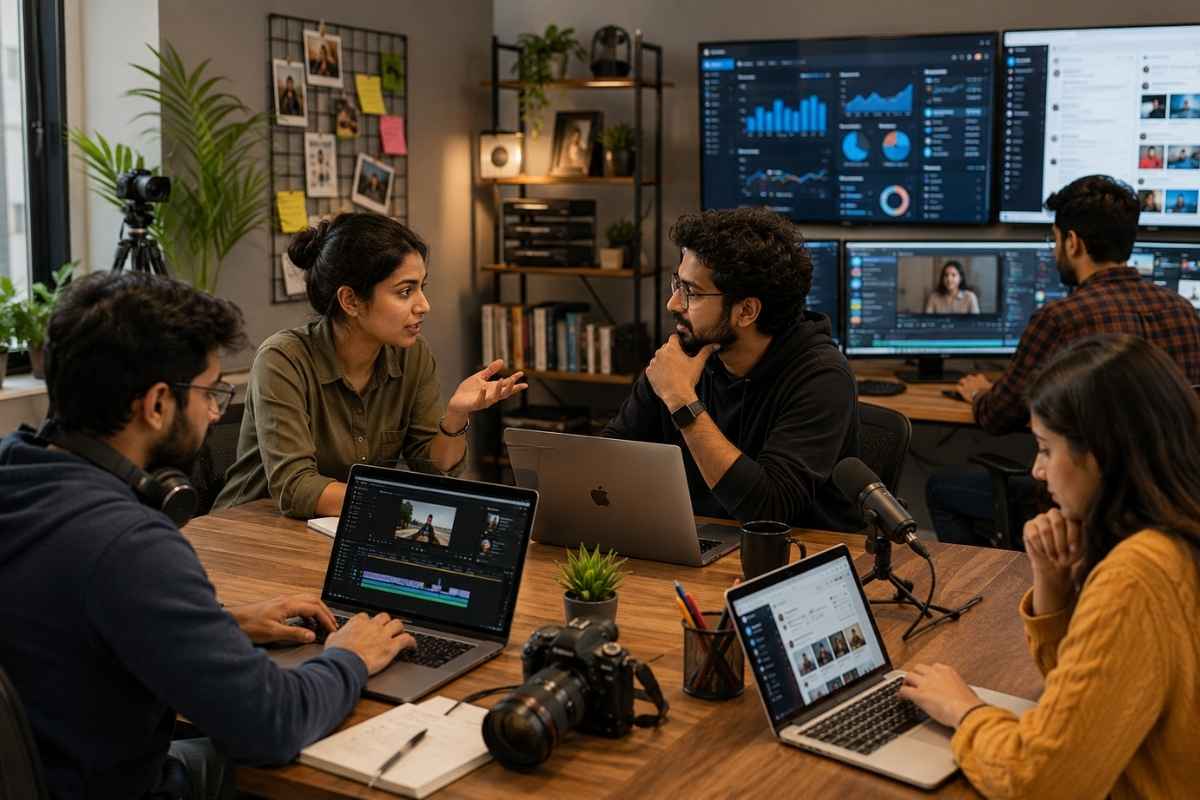
There was a time when building a media house meant having a large newsroom, expensive equipment, powerful investors, printing presses, satellite connections, and a massive distribution network. The media was controlled by big organisations because the tools required to create and distribute content were expensive and limited.
That world has changed.
Today, a small team with a strong idea, a clear voice, digital tools, social media presence, good storytelling, and consistency can build a serious media platform. Independent media houses are no longer sitting on the sidelines. They are creating influence, building communities, breaking stories, shaping opinions, supporting local businesses, and competing with much larger networks in their own space.
This is not just a media trend. It is a power shift.
The future of media is becoming more personal, more community-driven, more niche, and more independent.
Why Independent Media Is Growing
People today do not consume content the way they did earlier. They are no longer waiting only for newspapers, television bulletins, or large news portals to tell them what is happening. They are scrolling, searching, watching, listening, subscribing, sharing, commenting, and choosing their own sources of information.
This has opened a powerful opportunity for independent media houses.
A small media platform that understands its audience deeply can often connect better than a large network that tries to speak to everyone. Local stories, niche industries, community issues, founder journeys, food culture, tourism, lifestyle, business insights, and human-interest stories all need focused attention. Big networks may cover these topics occasionally. Independent media houses can build their entire identity around them.
That is where the real strength lies.
Independent media does not need to be everywhere. It needs to be meaningful somewhere.
Small Teams Have One Big Advantage: Agility
Large media companies often move slowly. There are multiple departments, approval layers, editorial filters, commercial pressures, and legacy systems. Independent media houses, on the other hand, can move faster.
A small team can identify a story, shoot a video, write an article, create social media posts, publish it online, send it through email, and start a conversation with the audience in a matter of hours.
This speed matters.
In today’s digital world, timing is everything. A relevant story published at the right moment can travel faster than a heavily produced campaign released too late. Independent media houses are able to respond quickly to events, trends, people, and opportunities. They can test ideas, understand audience reactions, and improve their content strategy almost immediately.
This makes them sharp, flexible, and highly responsive.
Technology Has Reduced the Gap
Earlier, only large media companies had access to professional publishing tools, video equipment, design teams, analytics, and distribution systems. Today, much of that power is available to everyone.
A small team can run a professional website, create high-quality designs, edit videos, send newsletters, manage social media pages, host podcasts, use AI tools for research and workflow support, track website traffic, study audience behaviour, and monetise content through advertising, subscriptions, sponsored content, events, and brand partnerships.
The cost of entry has reduced dramatically.
What matters now is not only the size of the organisation but the clarity of its positioning, the quality of its content, the trust it builds, and the consistency with which it serves its audience.
Technology has not made media easy. But it has made it more democratic.
AI Is Becoming a Support System, Not a Replacement
Artificial intelligence has become one of the biggest enablers for small media teams. It can help with research, headline ideas, content planning, summaries, editing support, SEO, translation, transcription, social media repurposing, and workflow improvement.
For independent media houses, this is a major advantage.
A small editorial team can now do more with less. They can convert one interview into an article, a short video, a quote card, a newsletter, and multiple social media posts. They can organise ideas better, reduce repetitive tasks, and focus more on storytelling and strategy.
But AI alone cannot build trust.
Media still needs human judgment. It needs emotional understanding, context, ethics, lived experience, local knowledge, and editorial responsibility. AI can support the process, but the soul of media must remain human.
The strongest independent media houses will not be the ones that blindly depend on AI. They will be the ones that combine technology with human insight.
Audiences Want Trust, Not Just Noise
The internet is full of content. Every day, people are surrounded by headlines, reels, opinions, videos, breaking news, sponsored posts, and viral trends. In this noisy environment, trust has become more valuable than reach.
People want to follow media platforms that feel real. They want sources that understand their world, speak their language, respect their intelligence, and do not treat them merely as numbers.
This is where independent media houses can create deep relationships.
A local business owner may trust a regional media platform more than a national channel because it understands the local economy. A chef may value a hospitality magazine because it understands the industry. A traveller may follow a niche destination platform because it offers practical and authentic information. A young entrepreneur may connect with a founder-led media platform because it speaks from real experience.
Trust is built when media stops broadcasting from a distance and starts becoming part of the community.
Niche Is the New Strength
For many years, media success was measured by mass reach. Today, niche influence is becoming equally powerful.
A media house focused on one region, one industry, one community, or one subject can become highly valuable if it builds authority in that space. It does not have to compete with national networks on every topic. It only needs to become the most trusted voice in its chosen area.
This is why independent platforms in areas like travel, food, hospitality, technology, sustainability, business, culture, education, and lifestyle are growing steadily.
Niche media attracts loyal readers. Loyal readers attract serious brands. Serious brands create revenue opportunities.
In the digital age, being specific is not a weakness. It is a strategy.
Branding Matters More Than Ever
Independent media houses cannot survive only by publishing content. They need to build a brand.
A strong media brand has a clear identity. People should know what it stands for, what kind of stories it tells, what audience it serves, and why it matters.
This includes the name, logo, design language, editorial voice, website experience, social media tone, event presence, newsletters, videos, and community engagement. Every touchpoint should create recognition and credibility.
Big networks already have legacy recall. Independent media houses must build recall through consistency.
When people repeatedly see meaningful stories from the same platform, they begin to remember it. When they remember it, they begin to trust it. When they trust it, they begin to support it.
That is how a media brand grows.
Local Media Has a Powerful Future
One of the most exciting opportunities for independent media lies in local and regional storytelling.
Every city, state, and community has stories that are often ignored by national media. Local entrepreneurs, artists, restaurants, hotels, startups, social workers, educators, tourism businesses, cultural events, environmental issues, and inspiring individuals all need visibility.
Independent media houses can become the bridge between these stories and the public.
They can give voice to people who may never appear on national television. They can document the changing identity of a region. They can support small businesses by giving them visibility. They can create pride within the community.
Local media is not small media. When done with quality and seriousness, it becomes the memory, mirror, and voice of a place.
Monetisation Is Changing Too
Independent media houses have more revenue possibilities today than ever before.
They can earn through digital advertising, sponsored articles, brand campaigns, newsletters, social media promotions, video content, events, awards, memberships, premium listings, affiliate partnerships, consulting, content production, and community-led initiatives.
The key is to avoid depending on only one revenue stream.
A modern media house must think like both an editorial platform and a business. It must protect credibility while building sustainable income. It must create value for readers, advertisers, partners, and the community.
This balance is not easy. But it is essential.
The media houses that survive will be those that understand both content and commerce without allowing one to destroy the other.
The Human Side of Independent Media
Behind every independent media platform, there is usually a small group of people carrying a big vision.
They may not have the largest office, the biggest budget, or the most advanced studio. But they often have hunger, belief, creativity, and a personal connection with the audience they serve.
They know the struggle of building something from scratch. They understand the pressure of deadlines, limited resources, uncertain revenue, and constant change. Yet they continue because they believe stories matter.
This human side is what makes independent media powerful.
Readers can feel when a platform is created with sincerity. They can sense when stories are written with care. They can identify when a media house is not just chasing traffic but trying to create meaning.
In the end, media is not only about information. It is about connection.
The Road Ahead
Independent media houses are not replacing big networks completely. Large media organisations will continue to play an important role. But the monopoly of attention has been broken.
The future will belong to a mix of big networks, creator-led platforms, regional publications, niche magazines, digital-first newsrooms, community media brands, and independent storytelling ventures.
Small teams that are focused, ethical, creative, consistent, and technology-friendly will continue to grow. They will not need to look like traditional media houses. They will build their own models.
The rise of independent media is proof that influence no longer belongs only to those with the biggest infrastructure. It belongs to those who understand people, tell meaningful stories, build trust, and show up consistently.
That is the real opportunity.
The next big media house may not begin in a giant newsroom.
It may begin with a small team, a clear purpose, a laptop, a camera, a website, a few social media pages, and the courage to tell stories that matter.